Monthly book reports, author interviews, bonus content, recipes, and cat pictures, straight to your inbox.
Click here to subscribe!
Book Report Corner
by Tucker Lieberman
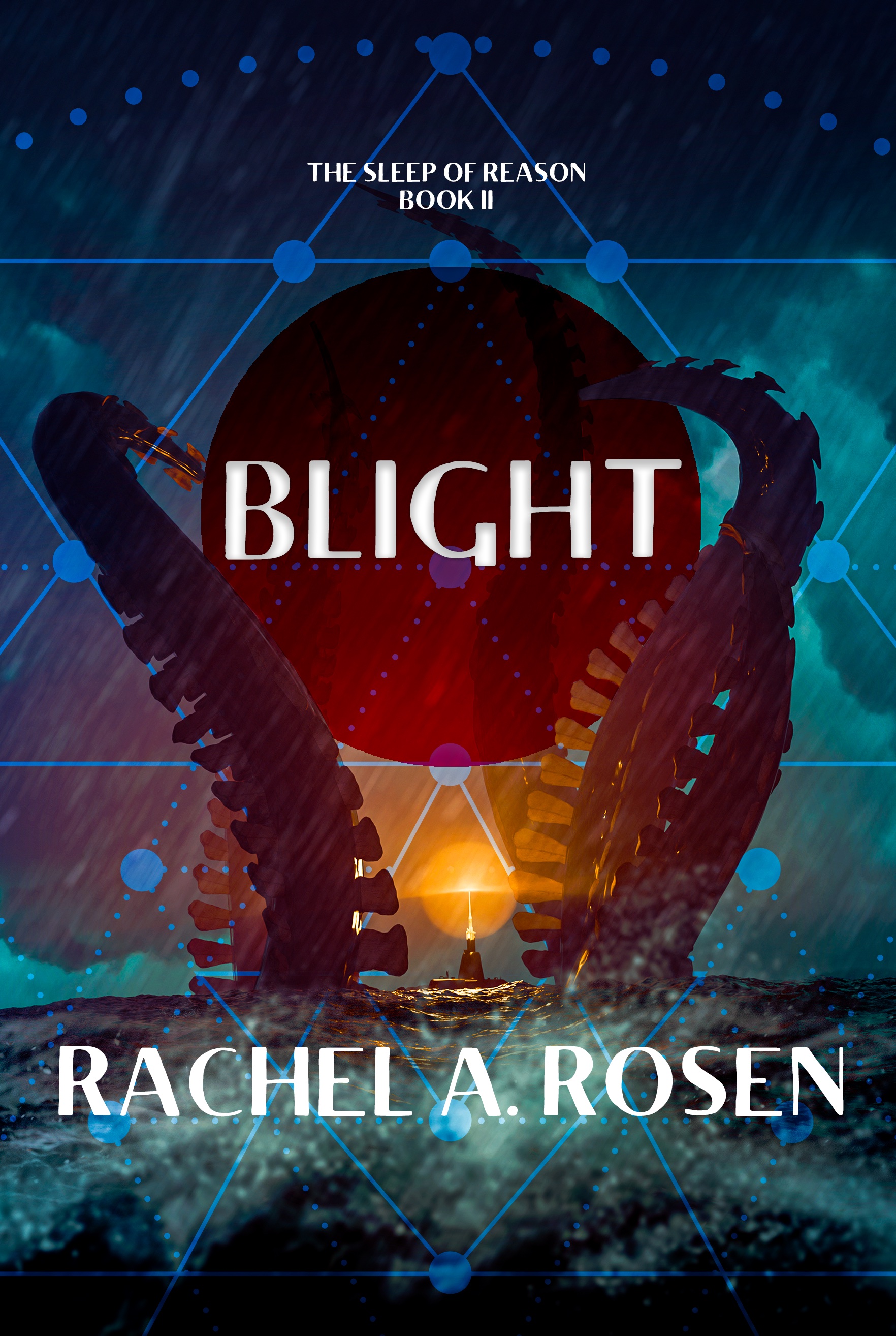
Some time ago, I discovered Cascade by Rachel A. Rosen.
The sequel, Blight, has awakened.
In the first book, the Earth’s climate has begun to break down, and magic bursts from the planet, entering people. Will the world end? “The world is always ending, for someone,” a wise eco-activist says.
The sequel Blight, has got more demons.
These are the things that, according to Blythe’s experience, kept away a demon: absolutely fucking nothing, if it really wanted to get at you. It would unhinge its jaws and swallow you before you could reach for your gun. It would have claimed your mind long before that. You would walk, smiling, into its rotting arms as it sang your name.
The world collapses by fire, by ice, by violence, by spellcasting, and if it — whatever “it” is — doesn’t get you, it’ll get someone you cared for.
“The first deaths had names, faces, memories attached to them,” but the ones that came after were “cumulative damage, termites in the wood unnoticed until the house collapses,” and then “whole neighbourhoods, small towns, entire ecosystems, tragedy writ too large to enumerate, let alone mourn…other people were shadows, sliding away too fast to register.”
But then, some of us are still alive.
Behind the Screens: Tuesday Author Interview
Every Tuesday, get to know a bit about the stories behind the books you love, and discover your next favourite novel.
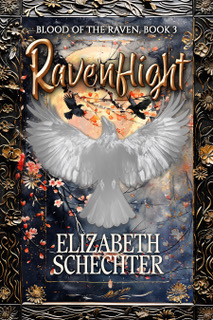
Rachel: How about I just let our featured author describe herself?
Elizabeth: Hello! My name is Elizabeth Schechter, and I write speculative romance that has its own Scoville scale. My work ranges from steamy to scorching, and celebrates love in all forms. My pronouns are she/her, and I am a queer chaos gremlin masking as a suburban mom.
Rachel: You have my attention! Please tell our readers all about your latest spicy concoction!
Elizabeth: My upcoming book is Ravenflight, the final book in my Blood of the Raven series, which follow the demigod children of the Morrigan as they search for their fated mates in a fantastical ancient Ireland, and in Imperial Rome. Have a small taste:
A hero. A son of Eire. A reckoning long overdue.
Leaving behind the splendor of Empire, Lorcan returns to the emerald wilds of Eire, where ancient magic stirs and old loyalties are tested. Beside him stand his mates and his chosen kin—fierce, loyal, and willing to follow him into the heart of danger. But the blood that binds can also betray, and the most dangerous enemy may not be on the battlefield… but seated at his own family’s table.
Ravenflight is the last book in the series, but the first book in this series, Ravenborn, has the distinction of being my first published novel. When it came out, the title was Princes of Air, and I thought it was a standalone. I feel like I should apologize to readers for the end taking sixteen years, but since book two only just came out last February, the wait hasn’t actually been that long.
Rachel: Who is your favourite of the characters you’ve written?
Elizabeth: My favorite character that I have ever written isn’t in this series. His name is Owyn, and he’s in my Heir to the Firstborn series. He comes into the series in the first book, and tries to take over every scene he’s in, even if he isn’t the main character in that scene. He’s snarky and deeply wounded, but he loves with his whole being, and when I wrote him, I could hear his voice clearly (he sounds like Phil Nightingale, who plays Sam Yao in the Zombies, Run! app, for anyone who is curious.)
Rachel: It sounds like you think pretty deeply about your work. How much research do you do?
Elizabeth: The amount of research I do for a book varies. There’s always some, but if I’m creating a world, I might not do as much research as I would if I’m writing something based in the real world. Blood of the Raven was deeply researched, because even though it is fantasy, it has one foot planted in recognizable history. For example, in Ravenfall (book 2) we meet Lorcan, who is training with his mother to be a healer. He ends up as a gladiatorial slave in Rome, and the person tasked to teach him Latin is the daughter of his owner, who is a medicae. A healer. So I need to know the proper medicinal herbs for various things, and what they would be called in Latin AND in Irish! (There’s a glossary in the back of book 3.) I also researched Roman baths, how gladiators got to the arena (tunnels!), the layout of the now-ruined Temple of Vesta and the House of the Vestals in Rome, how Romans got tattooed, and how long it would take to get from Rome to London by ship in early summer.
Rachel: I have been known to fall into these research holes myself. Once you dig yourself out, what’s next?
Elizabeth: For my next trick, I’ll be wrapping up another series – my very spicy science fiction romance Tales from the Arena, which is about genetically engineered super-soldiers and the submissives who love them. Books one and two have been out for ages. Book three is ready to be sent to my editor, and book four is about a third complete.
Rachel: Where can our readers find you and your work?
Elizabeth: If you want to follow my shenanigans, you can find me pretty much everywhere but Twitter (I refuse to call it X). I also have a newsletter, which comes out once a month. You can find all those links here: https://linktr.ee/schechterelizabeth
Behind the Screens: Tuesday Author Interview
Every Tuesday, get to know a bit about the stories behind the books you love, and discover your next favourite novel.
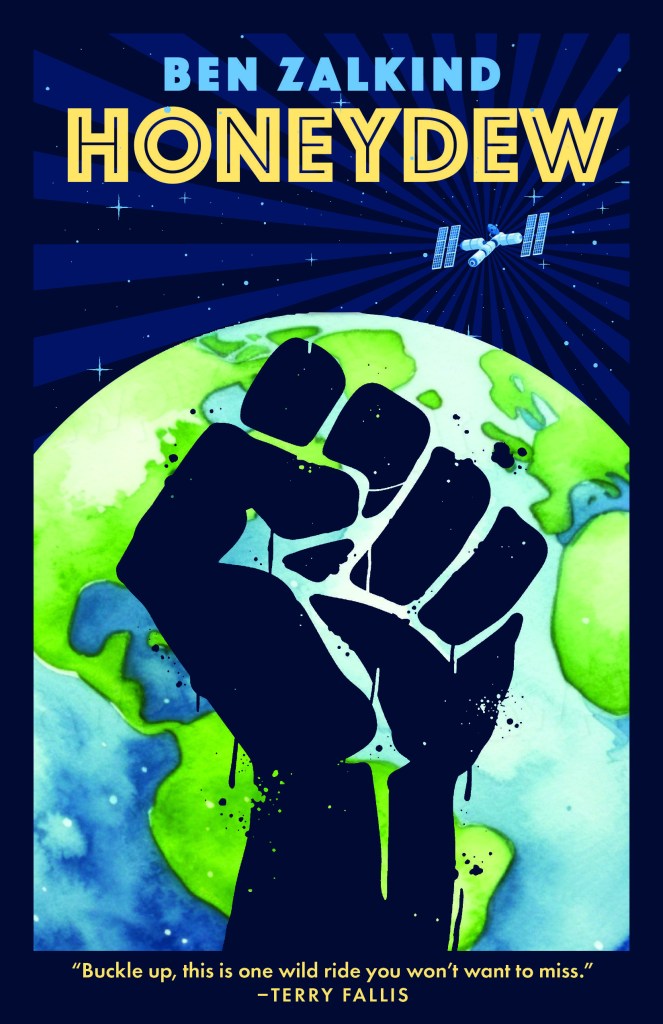
Zilla: If you’ve followed the tumultuous writing projects of us at Night Beats, you’ll know we have a soft spot for anarchists and submersibles that overwhelms all of our good sense. Ben Zalkind’s novel Honeydew might not be entirely sensible, but it is a delight, so here’s Ben to tell us about it.
Ben: Honeydew follows a quartet of second-rate saboteurs that runs afoul of a mega-corporation and its celebrity CEO. It’s got everything: a billionaire tech bro who plans to pilot a submersible drill to Earth’s mantle, a criminal kingpin who bankrolls an anarchist collective, a Swiss family doctor moonlighting as a spook, and even a direct action splinter cell composed entirely of elderly activists. One of my blurbers, the novelist Ryan Chapman, described it as “a Monkey Wrench Gang for the frenzied, techno-dystopian now.”
Zilla: What inspired you to write this madcap book?
Ben: Honeydew was a sort of outlet for my (many) preoccupations: tech oligarchy, surveillance capitalism, the clarifying power of humour, and why, to paraphrase the great cultural critic, Thomas Frank, Johnny still can’t dissent. The spark for the story itself was an illuminating Evan Calder Williams essay in The New Inquiry that traces the history of sabotage and highlights the early-20th-Century Industrial Workers of the World organizer and early feminist radical badass, Elizabeth Gurley Flynn. She coined the term “fine thread of deviation” to distinguish capitalist subterfuge (e.g., planned obsolescence) and worker sabotage. The former is “good for business” and the latter is a crime. This led to an encounter with the recently declassified OSS (now CIA) Simple Sabotage Field Manual and the journalist Brian Merchant’s fantastic Blood in the Machine, which sets the story straight about the unfairly maligned Luddites, who were among the earliest resisters of automation. To my surprise, the narrative that emerged from this hodgepodge of research was a farce, equal parts A Confederacy of Dunces and The Monkey Wrench Gang, about a quartet of feckless wannabe saboteurs who have the right idea but can’t quite follow through.
Zilla: You’ve named plenty of nonfiction influences on your philosophy and writing. Who are your fictional favs?
Ben: It’s so hard to choose just one. Let’s go with Steerpike from Mervyn Peake’s extraordinary Gormenghast Trilogy. I don’t think a more developed, sympathetic antagonist has ever been written. Peake’s dense, descriptive prose is unlike anything else I’ve read, and his characters are so richly detailed that they seem to be drawn on the page (Peake was equally famous for his art, some of which accompanies certain editions of his books). Through the course of the story, we watch Steerpike transform from an oppressed kitchen wretch in a sprawling castle to a Machiavellian mastermind bristling with resentment. And what’s most stunning is that we can trace the formation of his consciousness. We know why he does what he does. We might not agree, but we can’t help but understand. Truly a masterclass in characterization.
Zilla: So do you write character-driven books? Or plot driven?
Ben: I would describe Honeydew as a plot-driven novel with an ensemble cast of characters, perhaps a bit like one of Terry Pratchett’s Vimes books.
Zilla: Now that Honeydew is out, what’s next?
Ben: It’s a sort of follow-up to Honeydew, but not quite a sequel. I don’t want to say too much, but we will see much more of Mo Honeydew, whose story will be one strand of a three-part braided narrative that will expose new cracks and crevices in Bonneville City, where a very large infrastructure project looms darkly.
Zilla: Thanks for sharing your story and your process. We’re looking forward to reading! Where can the Night Beats community find you and your book?
Ben: You can get the book at the press’ website. You can find me on my website, on Substack, Instagram as @benzalkind, on Facebook as Ben Zalkind – Author, and on Bluesky as benzalkind.bsky.social.
Wrong Genre Covers
| Charlie and the Chocolate Factory as an Occupational Health and Safety Manual was suggested by Rob. Have a funny idea for a Wrong Genre Cover? Email us at nightbeatseu@gmail.com, and if Rachel likes your suggestion, she’ll make it in a future issue. Or @ us on basically any of the socials. |

Behind the Screens: Tuesday Author Interview
Every Tuesday, get to know a bit about the stories behind the books you love, and discover your next favourite novel.
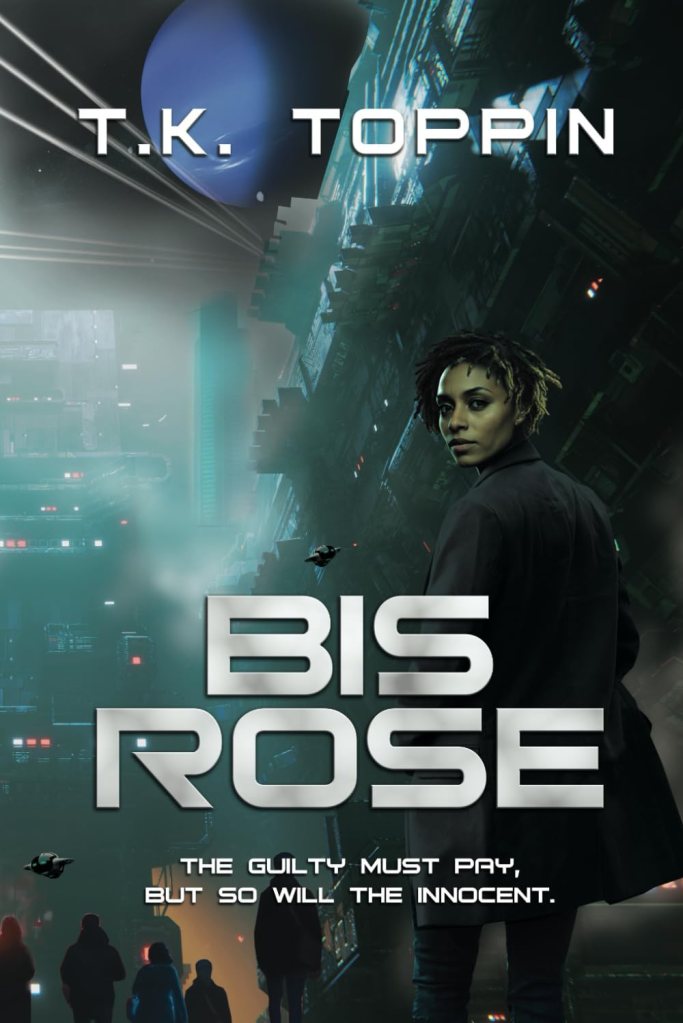
Rachel: We love a good space opera epic, and with us today to talk about her latest one is T.K. Toppin! T.K., tell us all about it!
T.K.: The book is called Bis Rose:
The guilty must pay, but so will the innocent…
Across the icy, untamed stretches of Neptune’s Kuiper Belt sprawl humanity’s habitat stations, repurposed generation ships and terraformed moons.
From megacity utopias to the Wild West of rundown ghettos, veteran Galactic Judicial Authority (GAJA) retrieval agent, Bis Rose, apprehends nefarious criminals. But when escaped convict Jun Hiro, the heir to the infamous Hiro Syndicate, drops in her lap, her stellar record may be in danger.
Bis follows the clues to capture her prey, but instead finds herself on a quest to prove Jun innocent of murder. An impossible task when an unknown force stalks her at every step.
Rachel: What inspired you to write this book?
T.K.: Bis Rose just sort of popped into my head. I envisioned the opening scene where she emerges from the transport shuttle and struts down the gangplank like she means business, or something like that. Full of attitude and all that “older woman, today’s not the day” vibe. It just went from there, full-on pantser mode.
Rachel: I love an older woman with no damns let to give. Is there a visual image—a painting or a photo—that inspired you?
T.K.: Cowboy Bebop – love that gritty, grungy, urban-ness. The many worlds and space ports in the Star Trek and Star Wars universe from upscale utopian to stark dystopian and everything in between. I also threw in some homegrown images from the present, and then I tried to combine them altogether.
Rachel: Why do you write? What drives you?
T.K.: I’ve always been a creative, starting my journey in the arts where I was a graphic designer for the last 30+ years. Writing was always there, albeit juvenile enough that it simply needs immediate incineration if ever it’s unearthed. To me, writing is another extension of my creative side, another way of expression. Plus, I’ve always been a reader and love being immersed in another world inside the book. I wanted to create something like that, and mostly, create something that I would want to read, again and again, like many of my favourite books.
Rachel: I’ve worn a number of hats too. What’s the secret to editing?
T.K.: I’ve a few processes. First step, once I reach the end, I immediately go back to the beginning and review it. Next step, wait a few days/weeks, and go back at it. Then beta readers. Then, repeating step 1 and 2, again, and again…until it “feels” right. But it’s like any other art, it’s never really right or done.
Rachel: What’s your next writing project?
T.K.: Another, and definitely the final, Jax Marlin novel. I wasn’t going to write about her and her copper again, but…it just sort of happened. I’m hoping for a release by the end of 2025.
Rachel: Tell us where the Night Beats community can find you and find your work!
2026 NEW YEARS RESOLUTIONS
Every year, we here at Night Beats make resolutions that we absolutely intend to keep and are not, in fact, breaking right now. This year, in 2026, we will definitely, absolutely, pinkie-promise…
Finish editing my sci-fi novel Abysm and see about publishing it… Also finish a WIP curio novelette (tentative title: Parenthesis)… Start a new novel (tentative title: Warbuyers) which will be immoderately bonkers and take ages to write… — Dale Stromberg
I will finish this damn draft! — Rachel Corsini
After I have finished this trilogy—with the exhausted triumph of a general putting down an enemy army—I will write something shorter, like a nice novella. — Rachel A. Rosen
My new year’s resolution is the same every year: I resolve to make fewer new year’s resolutions. — Zilla Novikov
I never make one, but I resolve to make one next year. — Tucker Lieberman
Behind the Screens: Tuesday Author Interview
Every Tuesday, get to know a bit about the stories behind the books you love, and discover your next favourite novel.
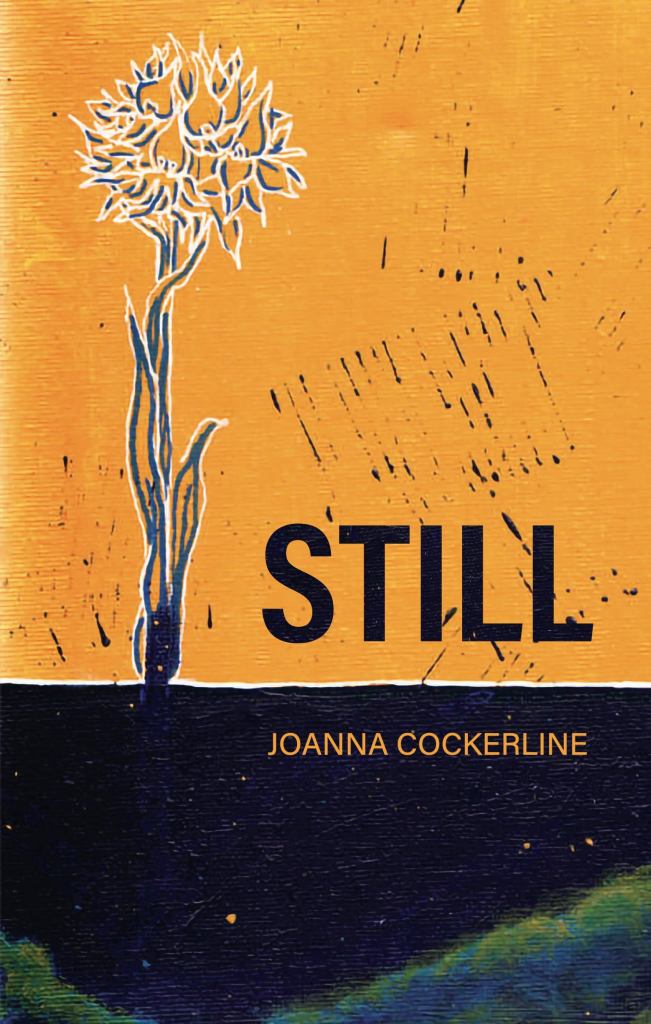
Rachel: Today we’re joined by Joanna Cockerline, author of Still. Joanna, can you tell us a little about your latest book?
Joanna: Still is the story of Kayla, who is living and working on the streets of Kelowna, BC, Canada, and of Little Zoe, a woman in the sex trade who is missing. Set in a vibrant and diverse community of people living on the streets, the novel explores sex work, living unhoused, the opioid crisis, friendship, what it means to survive, and what it means to find a home—especially within one’s self.
As Kayla—whose past is darker than she tells—searches for her missing friend, she also uncovers much about her own life. The novel delves into both the pain and resiliency of childhood, with flashbacks to Kayla’s past with horses and how she came to be on the streets. Kayla also becomes friends with an outreach worker whose outwardly picture-perfect life belies her struggles with postpartum depression, alcohol abuse, and bipolar, and who yearns to rediscover her passion for photography and share its magic with Kayla.
The narrative considers what home means, how different forms of community are possible, and how we can tell the stories that are ourselves.
Still asks questions about what it means to be missing and what we can—and cannot—go back to. Ultimately, Still is a story of community, friendship, resilience, and hope.
Rachel: That sounds like an intense and fascinating premise for a novel. Is it drawn from your own life?
Joanna: Still is inspired in part by some of my own experiences as well as experiences as a longtime street outreach volunteer, and co-founder of a street outreach organization that focuses on people involved in the street-level sex trade. The novel is a testament to strength and resiliency, despite the struggles people many face. Still is dedicated to people I know who live, or have lived, on the street, including some in memory, and I want to do them justice.
Rachel: If you could meet your characters, what would you say to them?
Joanna: To Kayla, the protagonist of Still – an 18 year-old living and working on the streets – I would say “keep going”, in so many ways.
Rachel: Who is your favourite fictional character someone else wrote? And why?
Joanna: I admire the strength of Sethe in Toni Morrison’s novel Beloved, as she stood by herself as she faced impossible situations.
Rachel: Who is your favourite character you’ve written, and why?
Joanna: The character of Little Zoe–the missing woman in Still–is kind, magnetic, savvy, and enigmatic. She came to life as I was writing her, and lives on for me far beyond the page.
Rachel: Is your work more plot-driven or character-driven? Or a secret, third thing?
Joanna: While Still is character-driven, it also embodies a vivid sense of place—as though the streets and the Okanagan Valley are living, breathing characters too. Still also celebrates the small moments of beauty that are possible despite–or because of—difficulty, and the magic that can be found in small things that sometimes go unnoticed unless you lean in close.
I wrote it for the people who lived it, hoping to do them justice. Many of them have read it and love it, which makes my heart happy. I also hope it will be appreciated by anyone who enjoys literary fiction, who appreciates stories of the underdog, who is captivated by mystery, and who has known struggle in its various forms.
Rachel: What’s your next writing project?
Joanna: Many readers have wondered if there will be a sequel to Still, and that’s what I’m working on now. The characters came alive for me and had more to say, more to live.
Rachel: Tell us where the Night Beats community can find you and find your work!
Still is available in stores and online, wherever books are sold. Supporting local independents is always great! If it is not in stock, it can be ordered.
You can follow me on Instagram @joanna.e.cockerline or check out my website (which includes dates and locations for my cross-Canada tour) on www.joannacockerline.com.
Behind the Screens: Tuesday Author Interview
Every Tuesday, get to know a bit about the stories behind the books you love, and discover your next favourite novel.
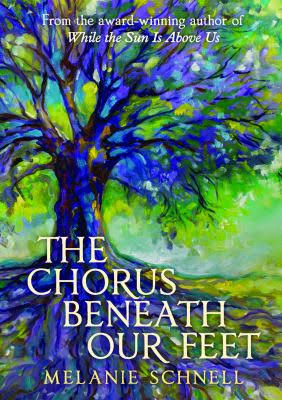
Rachel: With us this week to tell us about her latest novel, The Chorus Beneath Our Feet, is Melanie Schnell! Melanie, can you tell us a little about the book?
Melanie: The Chorus Beneath our Feet is my second novel. Jes is a a grief-stricken soldier who accompanies his best friend’s body home after eight years away, only to find his non-speaking sister, Mary, missing and wanted for questioning by the police in the murder of an infant in the city’s central park. As Mary’s life hangs in the balance, Jes must follow the obscure clues she’s left behind, the only means to find her and absolve her of wrongdoing. In his labyrinthine search, the mystery of the park’s infamous Harron tree and its connection to his sister, and their community, is slowly revealed.
Rachel: As an artist myself, I’m immediately struck by the visuals here! Was that the inspiration for the book?
Melanie: Fifteen years ago, when my son was a year old, I joined several other writers for a weekend retreat at an ancient farmhouse in the country in the middle of a cold prairie winter. It was just the five of us women, no wifi, our burgeoning stories, and my baby. I was working on my first novel, which was in its final stages, but during this weekend it was interrupted by a vivid image of two women standing barefoot and hands-free on a tree branch, impossibly, in the midst of a violent storm. I sketched the image in my notebook and promised to return to it later. This image became my second novel, The Chorus Beneath our Feet.
That tree in the picture grew into a central character, and what I became immediately interested in was what lay beneath her: roots, soil, fungi, long-lost treasures, scattered bones of skeletons, and all the memories representing what has lived over millions of years before us. The question the tree was asking me as I wrote was, What is our connection to what came before us? How are we impacted by these previous lives? The answers slowly unfurled into my literary mystery, The Chorus Beneath Our Feet, which follows Jes, a soldier returned home from Afghanistan after eight years away.
Rachel: Sounds like a powerful moment. If you weren’t a writer, what do you think you’d do instead?
Melanie: I would still need to be some kind of storyteller, so probably a documentary filmmaker. (Which requires lots of writing. Is that cheating?)
Rachel: I won’t tell if you don’t. Tell us where the Night Beats community can find you and find your work!
Melanie: Instagram: @melanie_schnell (7) Instagram
Facebook: @ Melanie Schnell Facebook
Amazon link: The Chorus Beneath Our Feet : Schnell, Melanie: Amazon.ca: Books
Publisher Link: The Chorus Beneath Our Feet by Melanie Schnell — Radiant Press
Book Report Corner
by Rachel A Rosen

As you might guess from my latest book, I love sea creatures and hate capitalism. Which makes Undrowned: Black Feminist Lessons from Marine Mammals by Alexis Pauline Gumbs the perfect sort of book for me. (I mean, my favourite part of Moby-Dick was the whale facts, even when they were wrong. This one won’t take you nearly as long to read.)
Undrowned book is a stunning, poetic tribute to Blackness, queerness, femmeness, fatness, resistance, solidarity, and love, told through the lens of marine biology. It brings together two of my great loves: activism and whale facts. This is a book that’s all activism and whale facts, in the best possible way. What a joyful read.
Behind the Screens: Tuesday Author Interview
Every Tuesday, get to know a bit about the stories behind the books you love, and discover your next favourite novel.

Rachel: Today we’re pleased to welcome back Macy Lewis to talk about her newest book, Infinite Intelligence! Can you tell us a little about it?
Macy: Aria Marsh works as a line manager at super factory Fitton’s Fixtures, Fittings, and Fancy Goods. Employees from a range of disabled communities produce lawnmowers and sewing machines to lighting fixtures, furniture, and wheelchairs. It even houses a call center, connecting disabled individuals to government services.
When Aria brings Nigel—her Natural Interactive Guide for Enhanced Living—the AI program her husband Jasper designed to help her with everyday tasks that requires visual assistance to the factory, Nigel’s ability to control the factory machines and internal computer network make everyone uneasy. When a team of AI-powered robotic police officers go rogue at an airport, harming a family, the characters are forced to question whether humanity will survive or be ruled by AI?
Rachel: That sounds unfortunately timely. I guess I don’t need to ask what inspired it!
Macy: My inspiration for Infinite Intelligence came from my own use of screen reading technology, fears of AI taking over the world, and trying to get used to AI being present in the world forever more.
Screen readers make my phone and computer accessible. There are numerous apps that use AI or human assistants in real time to help with everyday life. I couldn’t forget the virtual assistants found on our phones and homes, as well as the chatbot programs and the smaller robots who are connected to our Wi-Fi.
I tried to combined the best features from all the technology we have today and create a super screen reader who could help Aria navigate her world.
Rachel: What are some of the questions your book grapples with?
Macy: With AI having no regulation at the moment, I asked the following questions, some are answered in Infinite Intelligence and some I’ll have to answer in the next book.
Would AI outsmart humans without regulations?
If AI takes over, how would we as a human race react to it? Would we survive, or would AI start walking among us, trying to be human?
If we had humans and robots living together, what would that look like and how would we differentiate between robots and humans?
What will it take to get AI regulated so we don’t end up in a war of Man VS. Technology?
What’s the line of AI helping and hindering us?
You can find Infinite Intelligence at your favorite online bookstore, but I’m also on:
 Night Beats Extended Universe